Showing posts with label hijab. Show all posts

"Can Non-Muslims Wear the Hijab?" & Other FAQs on Cultural Appropriation

Yesterday was World Hijab Day.

While the organization has received criticism in recent years for promoting cultural appropriation and slut-shaming, it has played an undeniably vital role in bringing to light the struggle of millions of hijabis around the world. It has also sparked an important debate on cultural appropriation and dressing in solidarity with Muslim women. This post will answer some of the most frequently asked questions pertaining to the subject.

   1) Is it okay for a non-Muslim woman to cover her hair?

Although the headscarf has become synonymous with the Muslim faith, it is not a practice exclusive to Islam. Both men and women from other faiths also cover their hair for religious purposes. Non-Muslim women who cover their hair should refrain from referring to their headscarf as a hijab, however, as that word is used exclusively by Muslims. 
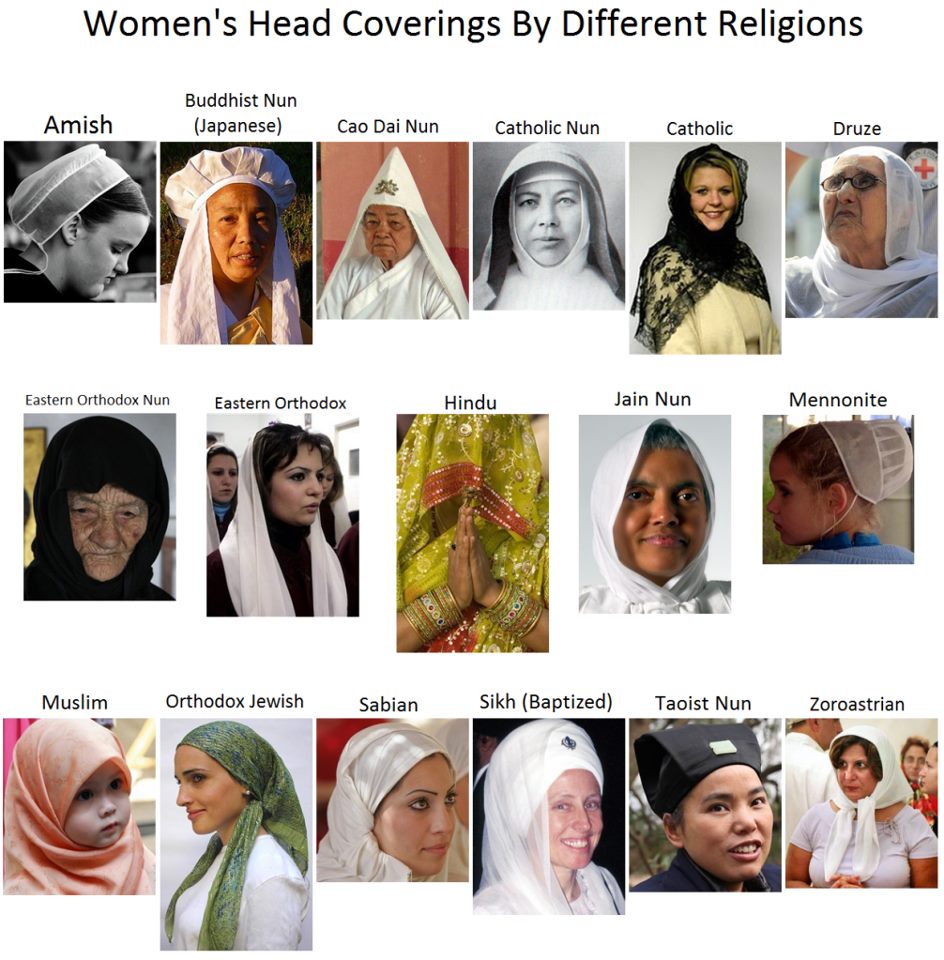
While women of other faiths can cover their hair, they should not refer to their headscarf as a "hijab".

   2) Can I wear the hijab to conduct a social experiment?

No. This is extremely offensive as it implies that my experiences as a hijabi are not enough to convince people that the discrimination I face is real. Why is it necessary for a non-Muslim to "prove" Islamophobia is real? There are hundreds of Muslims who have gotten killed, stalked, and harassed by Islamophobes. Their stories have been shared widely around the world. Plus, there is ample statistical evidence to prove Islamophobia is a serious concern for Muslims in Western nations. Why don't you believe us when we tell you our stories?

   3) Can a non-Muslim wear a hijab in solidarity with hijabis?

There are other ways to show solidarity with us. Supporting our businesses, fighting for us when we are being harassed in public, offering to take public transit with us to protect us from Islamophobic attack, and giving us more representation in your artwork are just some of the many things you can do to help us. Unfortunately, non-Muslims wearing a hijab does not help us out much.

   4) Can a non-Muslim buy modest clothing from Islamic stores?

Absolutely, as long as it's not traditional clothing like kaftans or shalwar kameez. Dresses, skirts, and hijabs are fair game.

   5) Can I wear a headscarf because it's beautiful?

Since religious women are ostracized for covering their hair, it is inappropriate to wear a headscarf because you think it's "cute". 

Sorry, gothmummi.

   6) Can I follow hijabi beauty bloggers and share pictures of hijabis on my page?

Of course. As long as you're not fetishizing us.

    7) Can I cover my hair to protect myself from the weather?

I am not going to encourage you to freeze to death or suffocate in a sandstorm because you were trying to be culturally sensitive.

    8) What if a hijabi insists I wear one for a special event?

This is considered cultural exchange, not appropriation, and is completely alright.

Got any more questions that need to be answered? Don't hesitate to contact me!

Posted in , | 17 Comments

In Defense of "Slutty" Hijabis

A couple of months ago, I shared an article on my Facebook page about ‘Hijabi Hipsters’; a new generation of hijabis who fuse fashion with faith by wearing stylish hijab-friendly outfits.

"Wow, that sounds like you!" One of my friends noted. Most of the other people in the thread seemed to agree with him. His comment made me smile. Although I wouldn’t consider myself a hijabster, I was glad my friends thought I was stylish.

A photo of me at the Bahrain International Airport 

Then, it happened.

The negative comments started pouring in.

"Umm…isn’t the point of a hijab to be modest and not attract attention to yourself?" My male atheist friend remarked.

"Yea, I have met girls who wear a hijab with tight jeans and it just doesn’t make sense. How is that even modest?" My female non-religious Hindu friend chimed in.

"You can’t wear that with a hijab. It still attracts boys. She is beautifying her face." My male Muslim friend offered.

Soon the entire thread took a dramatic turn and went from praising hijabis for being modest yet stylish to bashing “hoe-jabis” for making a mockery off an important religious symbol by wearing “slutty” clothes in the name of modesty.

& throughout this entire encounter, I sat next to my computer screen, a cup of hot Kashmiri chai in my hand, wondering when I will finally get a chance to live without having to justify my attire to every single person I interact with on a daily basis.


Hijabis often get judged for wearing "immodest" clothes

I am writing this in defense of every single girl who has gotten told her clothes are not “hijab-friendly”. This is for every single person who thinks (s)he has the right to tell hijabis what they can and can’t wear.

I became what Muslim women call a “permanent hijabi” at age 18. Before that, I had a rocky relationship with the garment I chose to wear at age 10 to school only. I was the first female in my family to start wearing it. I had no guidance whatsoever. No one told me I couldn’t wear short sleeves with a hijab, for example, so I proceeded to do just that until I got called out for it at age 14.

Since I lived alone and didn’t interact with Muslims (especially hijabis) on a daily basis, I wore all kinds of “inappropriate” clothes with my hijab: short skirts, short sleeved shirts, tight skin-hugging pants, etc.

It wasn’t until I started living with my aunt (who started wearing a hijab by then) that I finally realized the hijab was more than just a cloth you wear on your head. It was an entire lifestyle that you couldn’t just put on and off as you pleased.

Here’s what I wish people understood about “hoe-jabis”:
  • Most of them are confused. They most likely don’t live with or around other hijabis so they have no idea what really counts as “modest” since different people have different perceptions of modesty. 
  • They might be experiencing a change of heart. Often times, hijabi girls stop covering their hair for a multitude of reasons. Usually the transition starts with them wearing more “inappropriate” clothes. Once you start wearing the hijab, it’s hard to take it off. It literally makes you feel like you’re walking around naked. That’s why many hijabis use that as a stepping stone so when they are ready to finally take it off, they feel more comfortable doing it.
  • They might be wearing a hijab for reasons other than modesty. It is not uncommon at all to meet a Muslim girl who wears a hijab to make a political statement. I’ve also met cancer patients who wear headscarves once they start losing their hair due to chemotherapy.
  • They are tired of being judged. Think about how hard it is to be a hijabi. Islamophobes are more likely to attack them than any other group of Muslims. White feminists keep telling them that they’re oppressing themselves by choosing to dress a certain way. People of other religious groups judge them on their “fake” modesty. Perverts fetishize them. Misogynistic Muslims try to police their behavior and choice of attire while other hijabis judge them on their style.
  • They are humans too and are thus not exempt from making mistakes. Hijab-malfunctions exist. Sometimes the way someone steps out of their house is not the way they end up looking halfway through the day.
If you are a hijabi who is really interested in helping another out, guide her towards fashion bloggers like Amenakin, saimasmileslike and nabiilabee who manage to wear 100% Sharia-approved clothes and still look fashionable…or towards actual Muslim sources written by scholars explaining what a hijab is and what the rules are for wearing one.
Wearing a hijab does not limit a person's ability to express themself.

If you yourself are not a hijabi, please take a seat.

Hijabis do not exist for you to mock, criticize or fetishize. We are not “forbidden fruit” or hypersexual oriental beauties who are ladies on the street but freaks between the sheets. We aren’t repressed creatures who need orientalist men to come and “save” us by sexually exploiting us.

Judging women for dressing "immodestly" is a form of patriarchal oppression, even when aimed at women who choose to cover their hair. Remember this the next time you try to tell a woman what she should or should not wear.

Posted in , , | 6 Comments
Powered by Blogger.